

Grand Finale: National Space Imaging Payload Competition 2025 - Mission II
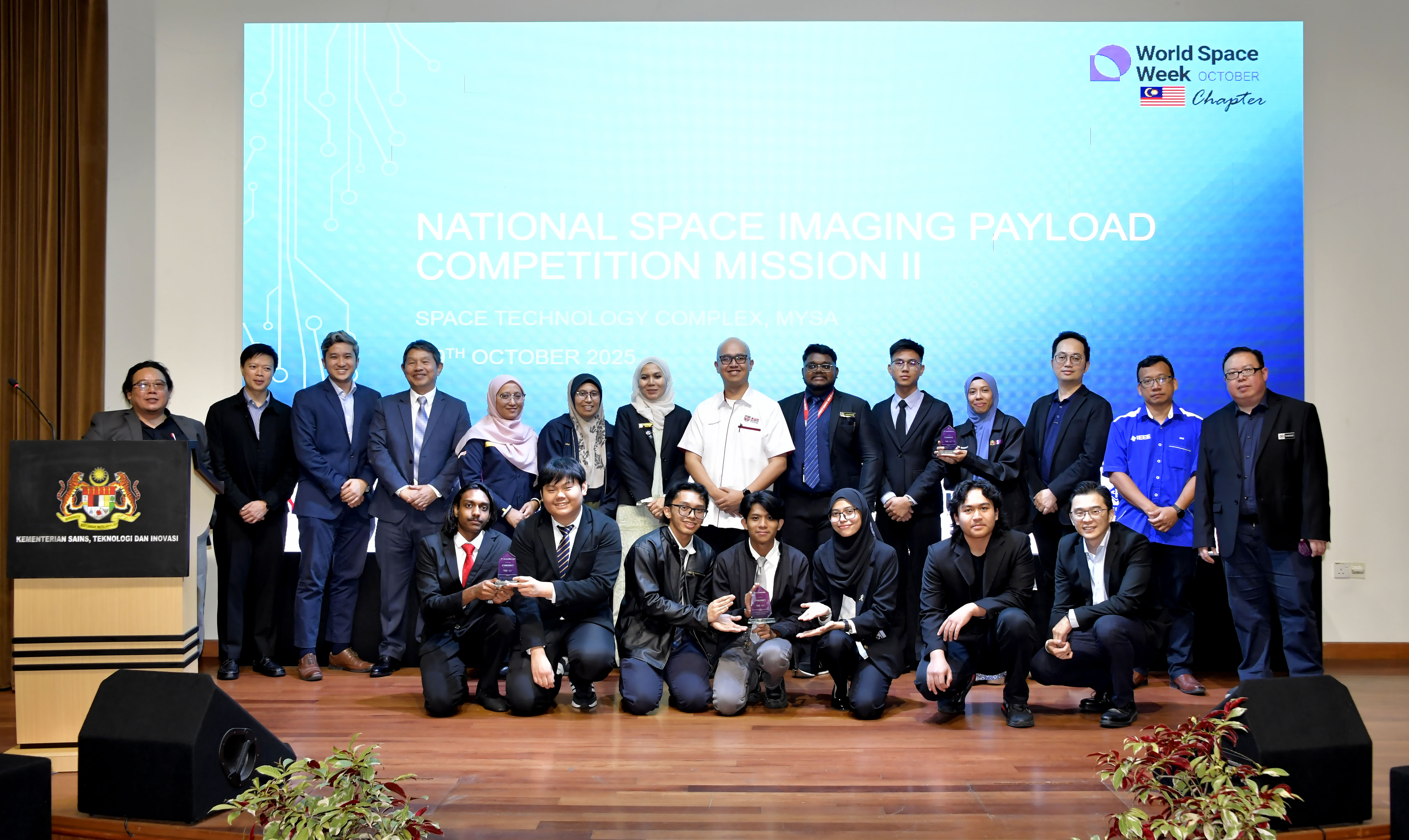
29th October 2025 - Cybernet Systems Malaysia Sdn. Bhd., in collaboration with Universiti Teknologi MARA (UiTM) and the Malaysian Space Agency (MYSA), organized the second National Space Imaging Payload Competition in October 2025 during World Space Week - Malaysia Chapter. The competition aimed to develop a high-resolution space telescope and attracted 8 engineering teams from the country's top universities such as USM, UPM, UTP, UM and UIAM. Initially, participants faced a screening stage where judges from the organizing team assessed submissions based on innovation, design feasibility, and mission relevance.
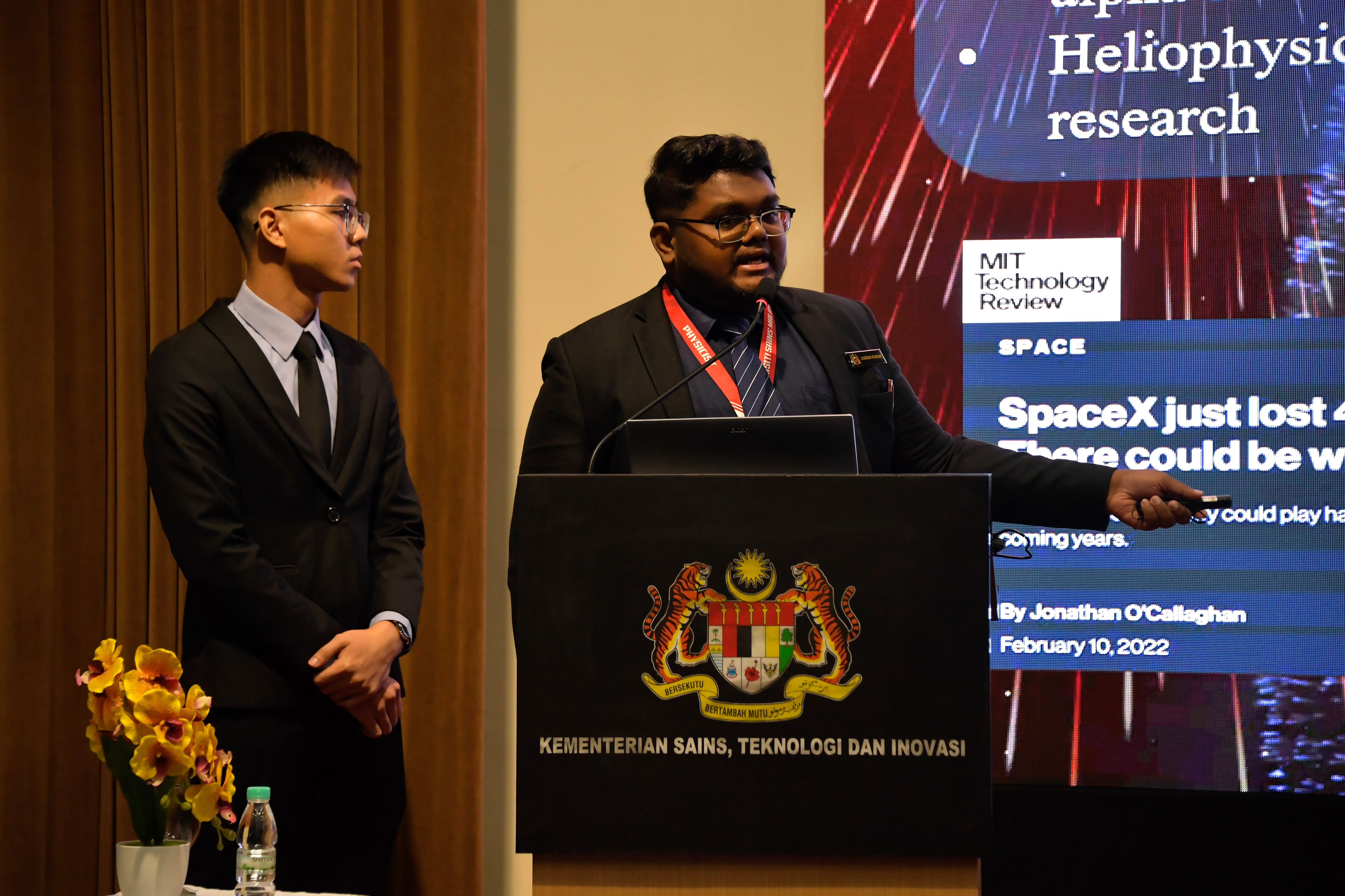
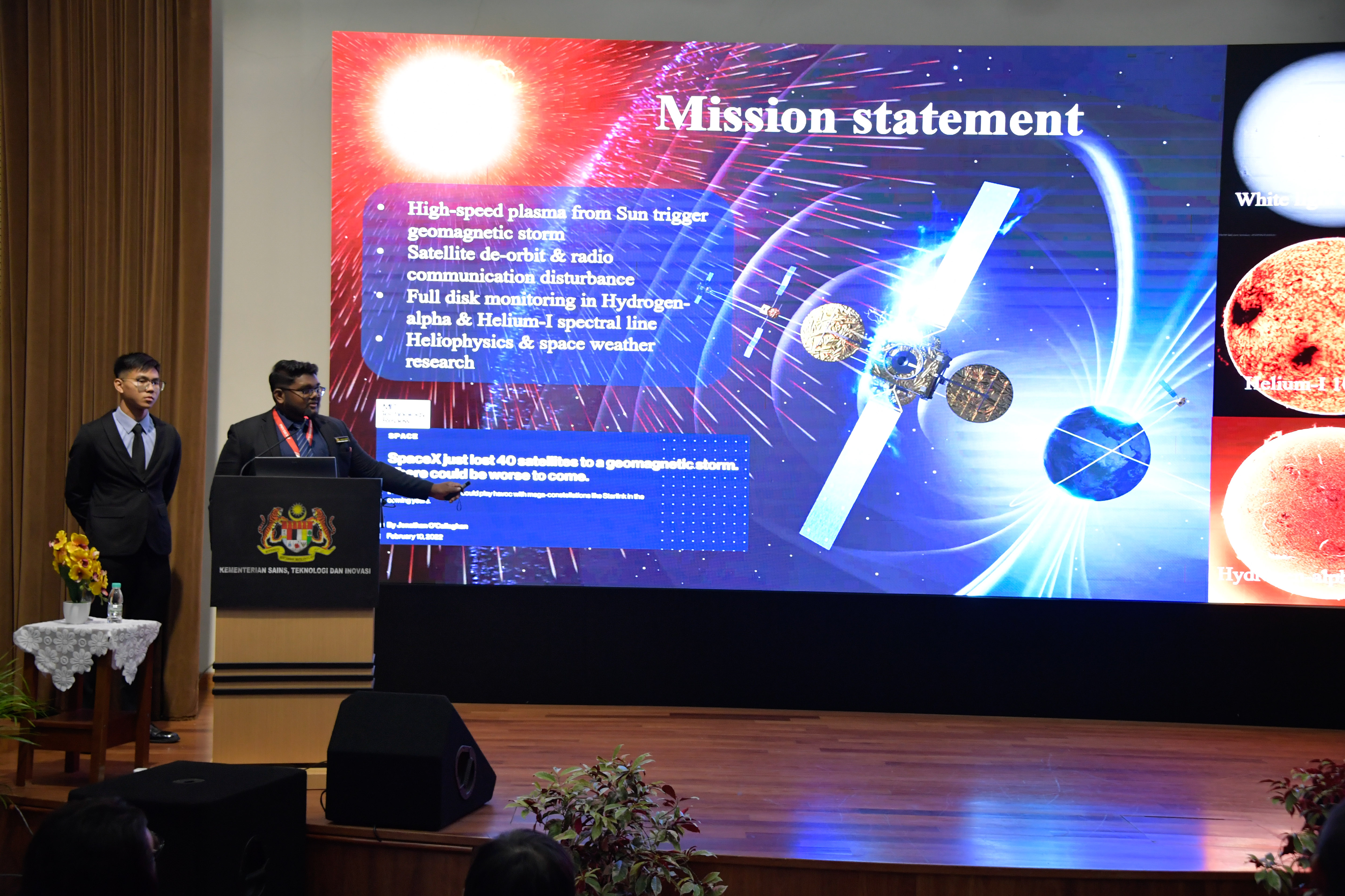
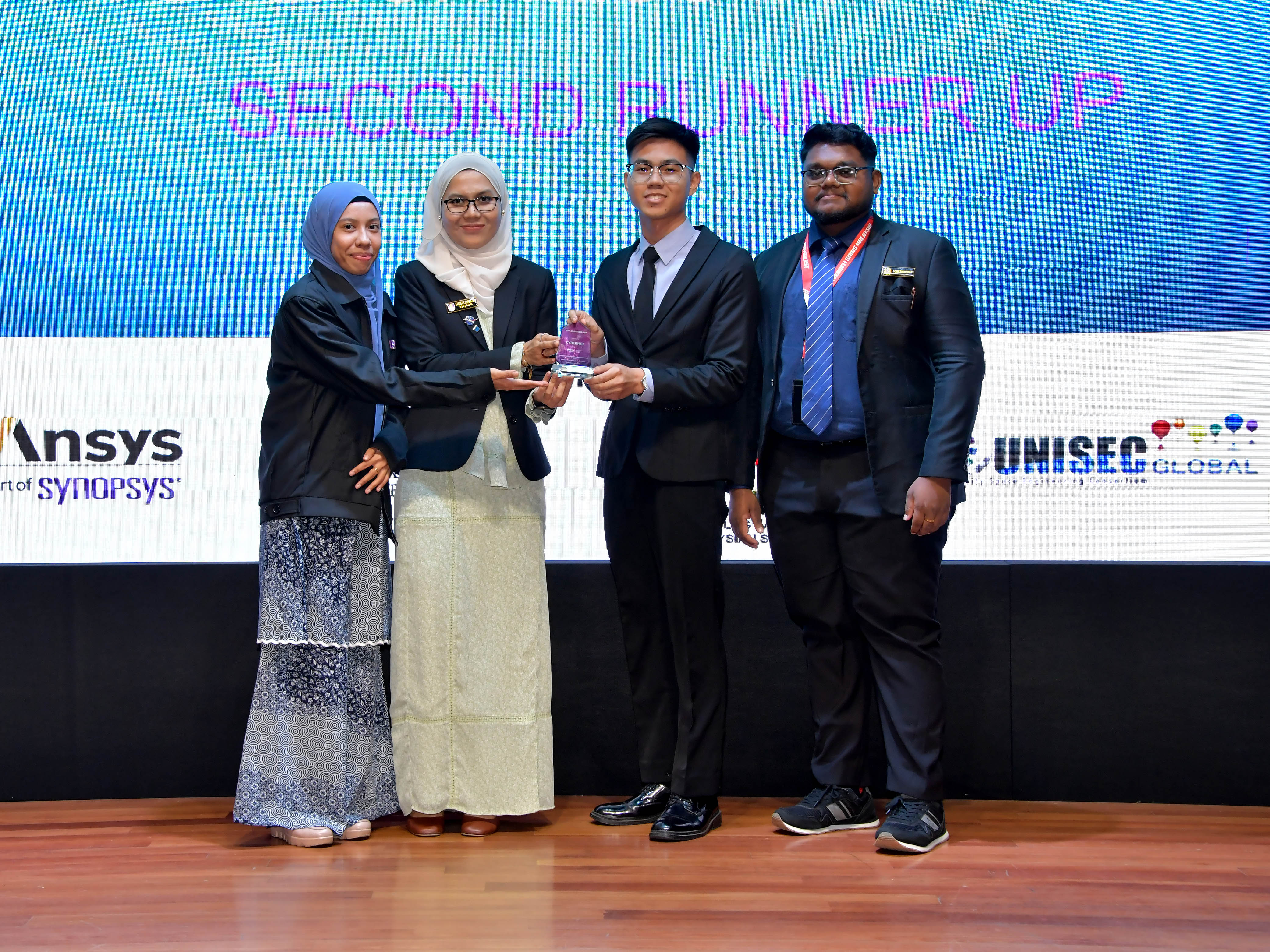
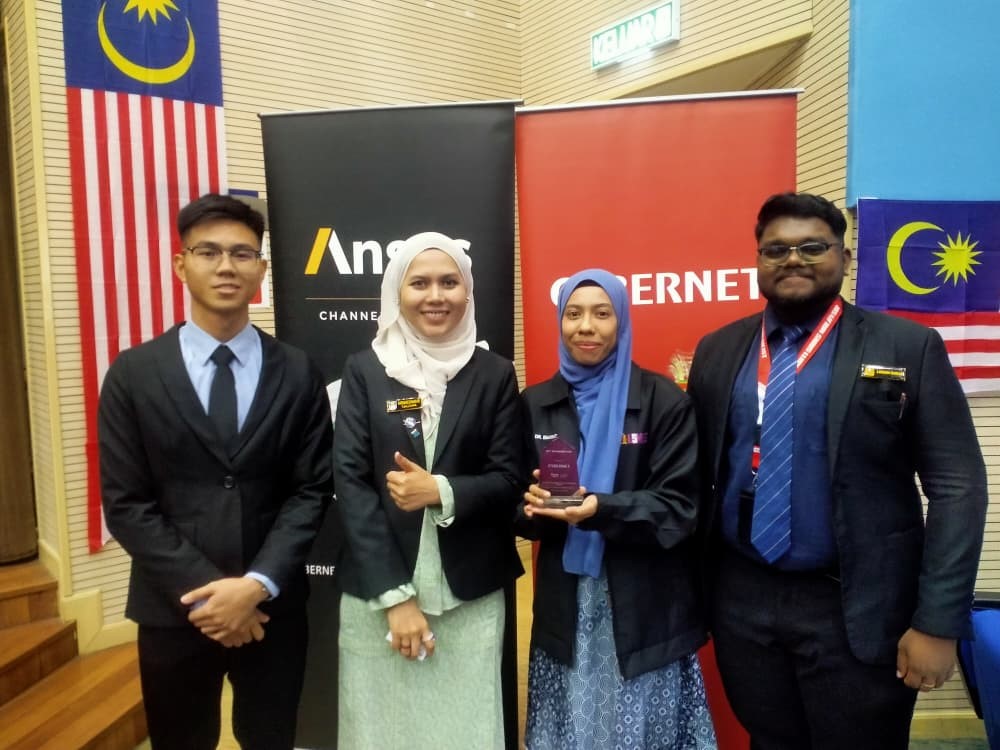
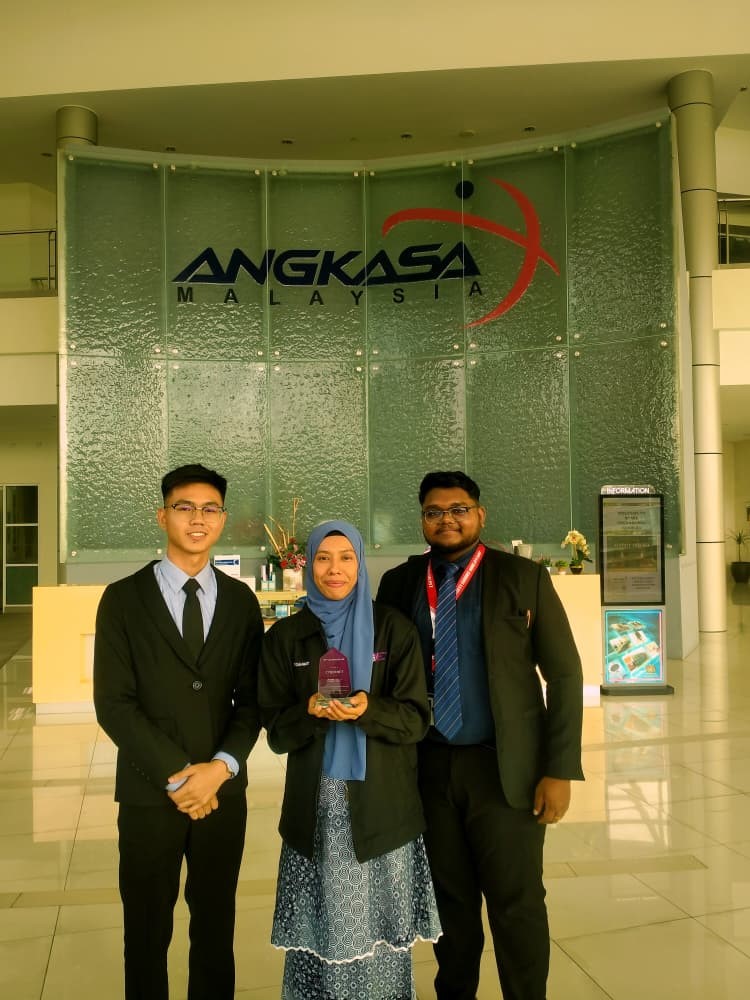
The HelioSat USM team from the School of Physics advanced through this stage, shortlisted as one of the grand finalists and victoriously achieved second runner-up position in the grand finale of the competition. The HelioSat USM team consisted of students namely Logesh Kumar Selvakumar (project director), Airil Azman bin Kamarul Zaman, Nirmatha Jeyakumar and Mohamad Haizul Hakime bin Kaniman. The team was supervised by Dr. Idahwati Sarudin (School of Physics), and Dr. Siti Harwani (School of Aerospace Engineering) for scientific mission design and space telescope engineering. On 29th October 2025, the team presented their optical engineering project at MYSA to a distinguished panel of judges such as Dr. Terence Jerome Daim (Research Officer, Malaysian Space Agency), Dr. Mohd Fais Mansor (Chair-elect, IEEE Malaysia ComSoc/VTS Joint Chapter), Mr. Mohamad Nadzri Tahir (Senior Vice President, Uzma Space & Defence), Mr. Lee Chon Kiat (Mechanical Lead, NTU Satellite Research Centre), Mr. Ron Chiong (Founder & Managing Partner, Perpetual Space Ventures) and Mr. Loh Kah How (Optical Application Engineer, CYBERNET Malaysia).
The design by HelioSat USM is described as a dual-band solar imaging payload with the mission of observing the coronal holes and solar flares of the Sun in 656 nm and 1083 nm wavelengths. The scientific goal is to help with space weather research, particularly heliosphysics and solar plasma dynamics. The optical design consists of wide bandpass thermal filter, hyperboloid mirrors with protected silver coatings, longpass dichroic, Hydrogen-alpha and Helium-I narrowband filters, CCD and InGaAs sensors for visible and near-infrared imaging. The final design is described as a f/13 unobscured Ritchey-Chretien telescope to be operable from L1 point in space. The judges praised the design's advanced idea and its practicality. This competition provided valuable experience of using Ansys Zemax OpticStudio which is an industry-standard CAE software for space technology engineering to the students. Overall, HelioSat USM’s victory as second runner-up in National Space Imaging Payload Competition demonstrated the capabilities of School of Physics and School of Aerospace Engineering, USM students and educators in space science and space technology innovation.
Article written by Logesh Kumar Selvakumar (4th year student)
- Hits: 358